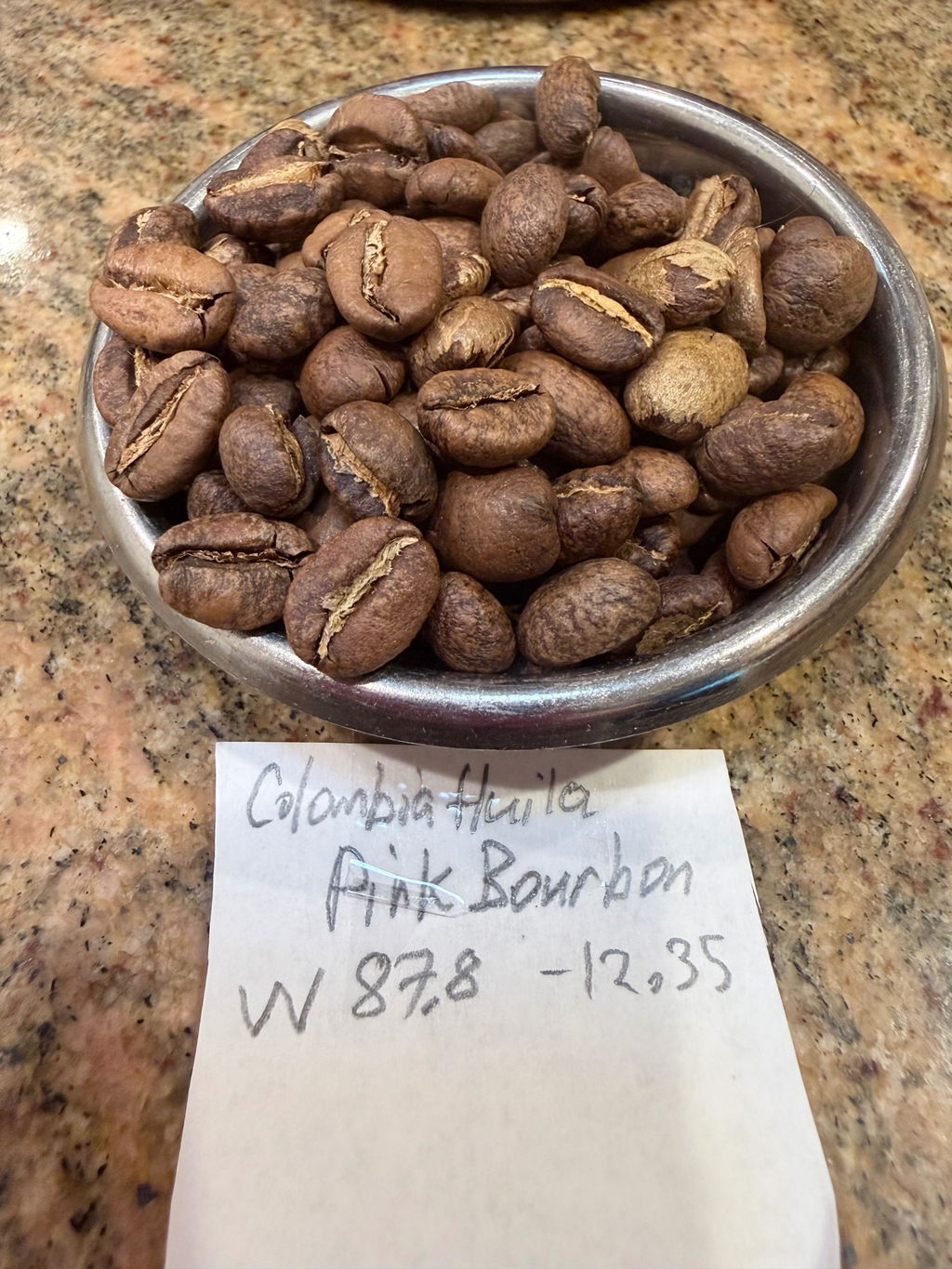
Colombia Huila Pink Bourbon

Colombia Huila Pink Bourbon

Colombia Huila Pink Bourbon
Full Cupping Notes
Specs
region processing drying method arrival date lot size bag size packaging farm gate Yes cultivar detail grade appearance roast recommendations type Farm Gate recommended espresso No
Product Overview
Product Overview
| process method | Wet Process (Washed) |
|---|---|
| cultivar | Bourbon Types |
| farm gate | Yes |
Farm Notes
Farm Notes
Origin & Farm Notes
This pink bourbon blend is from four different small producers in Colombia's Huila Department. These farms are less than than 10 hectares each, and planted in a mix of varieties, including Pink Bourbon. Recent genetic testing has shown a link to Ethiopian landrace types, however that doesn't necessarily mean it's not a Bourbon variant (more on the variety here). What we can say is that it shows a phenotypical resemblance to Bourbon, and the cups can be syrupy sweet, aromatic, and bright, depending on where it's grown. The farms that produced these lots are all very high altitude, reaching up to 2000 meters above sea level. The farmers belong to a coffee cooperative in Pitalito called "El Bombo", which is also the name used for a broader growing region in this part of the Andes. The name comes from a local "Bombo" tree that produces seed pods with little spikes surrounding the exterior, a weapon of choice for schoolyard shenanigans! The El Bombo cooperative ("Asombombo") works with hundreds of small coffee farmers across Colombia's southern Huila and Cauca regions.
Specs
Specs
Technical Specifications
Key specifications and operating details for this product.
| region | |
|---|---|
| processing | |
| drying method | |
| arrival date | |
| lot size | |
| bag size | |
| packaging | |
| farm gate | Yes |
| cultivar detail | |
| grade | |
| appearance | |
| roast recommendations | |
| type | Farm Gate |
| recommended espresso | No |

Colombia Huila Pink Bourbon

Colombia Huila Pink Bourbon
Full Cupping Notes
Specs
| region | |
|---|---|
| processing | |
| drying method | |
| arrival date | |
| lot size | |
| bag size | |
| packaging | |
| farm gate | Yes |
| cultivar detail | |
| grade | |
| appearance | |
| roast recommendations | |
| type | Farm Gate |
| recommended espresso | No |
Reviews
Reviews
The artificial intelligence machine suggested jumping on a pink bourbon based on my enjoyment of some citrus-forward Kenyan coffees. Those expectations were not met by Colombia Huila Pink Bourbon, but it was super delicious in its own right. Even without sparkling citrus acidity, I tasted delicious caramel and mild lemon flavors. Highly recommend.
Roaster: ROEST L100 plus
Profile: Sweet Maria’s
Batch size: 100 grams
Weight loss: 10%
Roast level: City (light)
Brew method: V60, 205 F, 1:16 ratio; bloom, a vigorous pour, then a gentle pour.